


Interpreting Setups for Events and Conferences: Quality versus Budget

This article explains the different options available to offer interpretation into multiple language during an international conference or summit, as well as their impact on quality and budget. Feel free to contact me to discuss how I can manage your multilingual project.
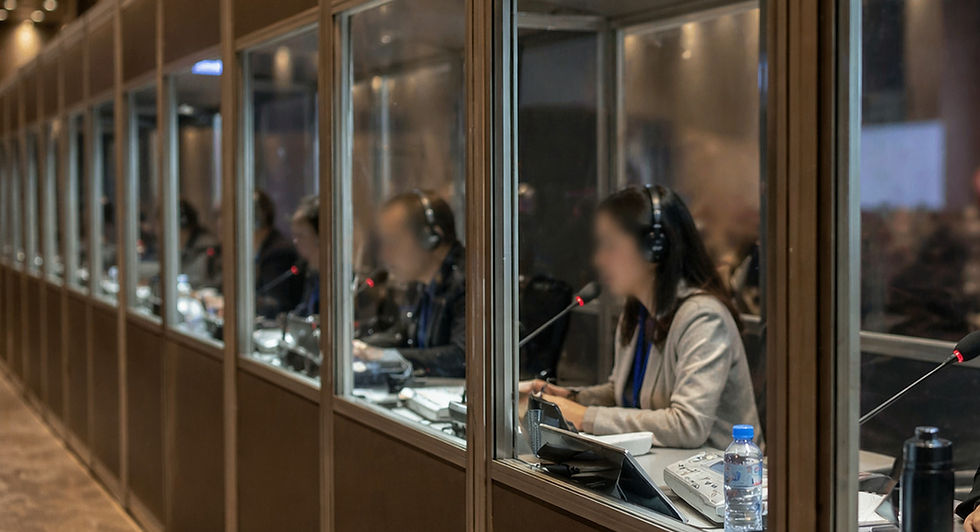
When planning a multilingual event, one of the key decisions is how interpreting will be delivered. From fully equipped conference venues to portable systems or remote solutions, different setups offer different levels of quality, flexibility and cost.
Understanding these options helps organisers make informed decisions and allocate their budget effectively. It is also a good time to decide whether your team has the capacity to manage this or whether your multilingual project might be better managed by and experienced consultant interpreter.
The gold standard — permanent interpreting booths
££££
The highest level of quality is achieved in venues already equipped with:
Soundproof interpreting booths
Professional audio systems
Onsite technicians
This setup offers optimal sound quality and comfortable working conditions for interpreters, allowing them to deliver the best possible interpretation into their language. This is also the most reliable sound set-up for high-stakes conferences. It is typically used for international and institution meetings and summits, as well as other high profile events.
Temporary booths for flexible venues
£££
If your preferred venue is not equipped, temporary booths can be installed.
These provide:
Good sound insulation
Professional working conditions
Flexibility in venue choice
They are widely used for corporate conferences, one-off summits, NGO events as well as medium to large multilingual events.
Portable interpreting systems
££
Portable systems involve:
Microphones and receivers (typically called "bidules")
No soundproof booths
They are suitable for smaller groups, site visits or workshops, or any situations with limited space or when the speaker is likely to walk around. Note that they provide lower sound quality, and that the challenging sound may impact the interpreters' performance. They also offer less flexibility in terms of language regime and audio feeds.
Remote and hybrid interpreting
£
Platforms such as Zoom allow participants and interpreters to connect online.
Advantages:
No travel costs
Flexible participation
Suitable for webinars and online training
Challenges:
Dependence on internet quality
Platform limitations
Greater cognitive load for interpreters
Hybrid events combine onsite and remote elements, requiring careful coordination. I generally recommend having at least one technician on site.
How budget and quality are linked
The choice of set-up will impact sound quality for both the attendants and the interpreters. The decision will naturally depend on the budget, the size and importance of the event and the will to invest in the participants' experience to promote repeat events.
Choosing the right setup for your event
The best option depends on:
Audience size
Number of languages
Event format
Technical constraints
Budget
An experienced conference interpreter can help you evaluate the options, ensure the sound quality is up to standard and suitable for your audience, and avoid unnecessary costs to make the most out of your budget.
You can contact me to discuss what might work best for your projet or check out my multilingual project management service.



Comments